Publications
Featured Research
-
![]()
Quantum Information Flow in Microtubule Tryptophan Networks
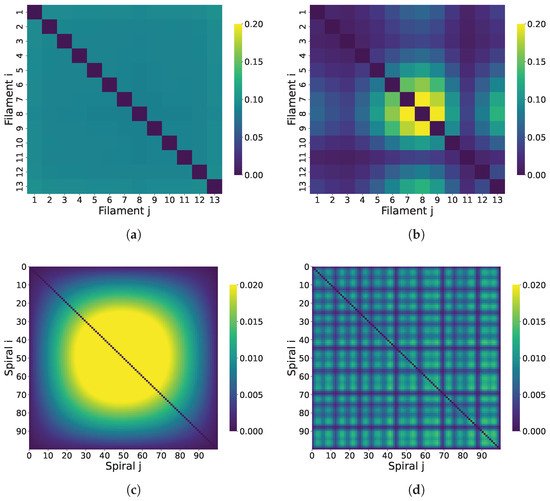
This paper modeled how ultraviolet energy moves through networks of tryptophan molecules inside microtubules. Using quantum open-system equations, the authors tracked how quantum correlations form, spread, and decay, showing that structure and initial excitation strongly affect how long nonclassical information persists.
-
![]()
Optical properties of the cytoskeleton: Light-matter & Quantum effects, and biological implications
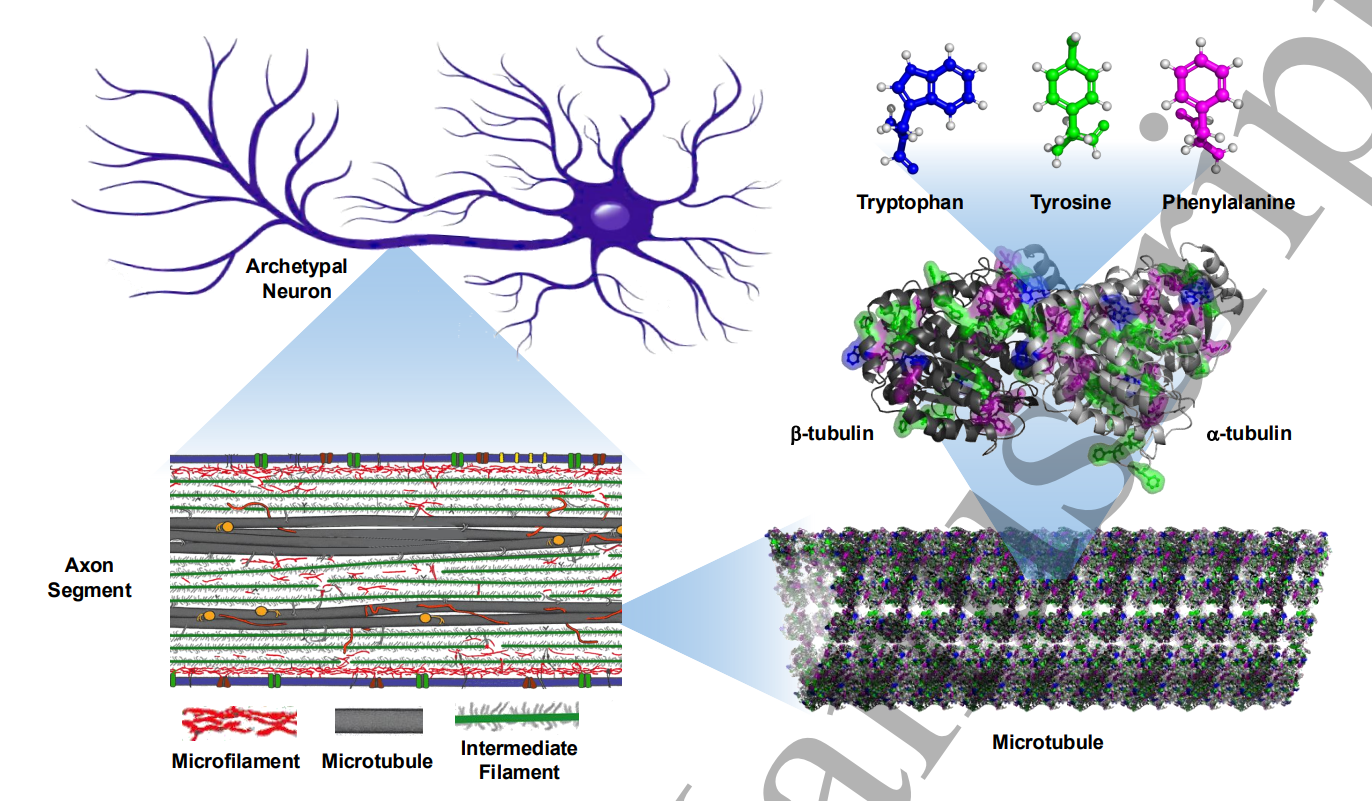
This review explores how microtubules may interact with light and electromagnetic fields, not just serve as cellular scaffolds. It summarizes evidence that they can guide light and potentially support coherent energy transfer, suggesting roles in biological photonics and possible applications in imaging and quantum-inspired biomaterials.
-
![]()
Magnetic Field-dependent Isotope Effect Supports Radical Pair Mechanism in Tubulin Polymerization
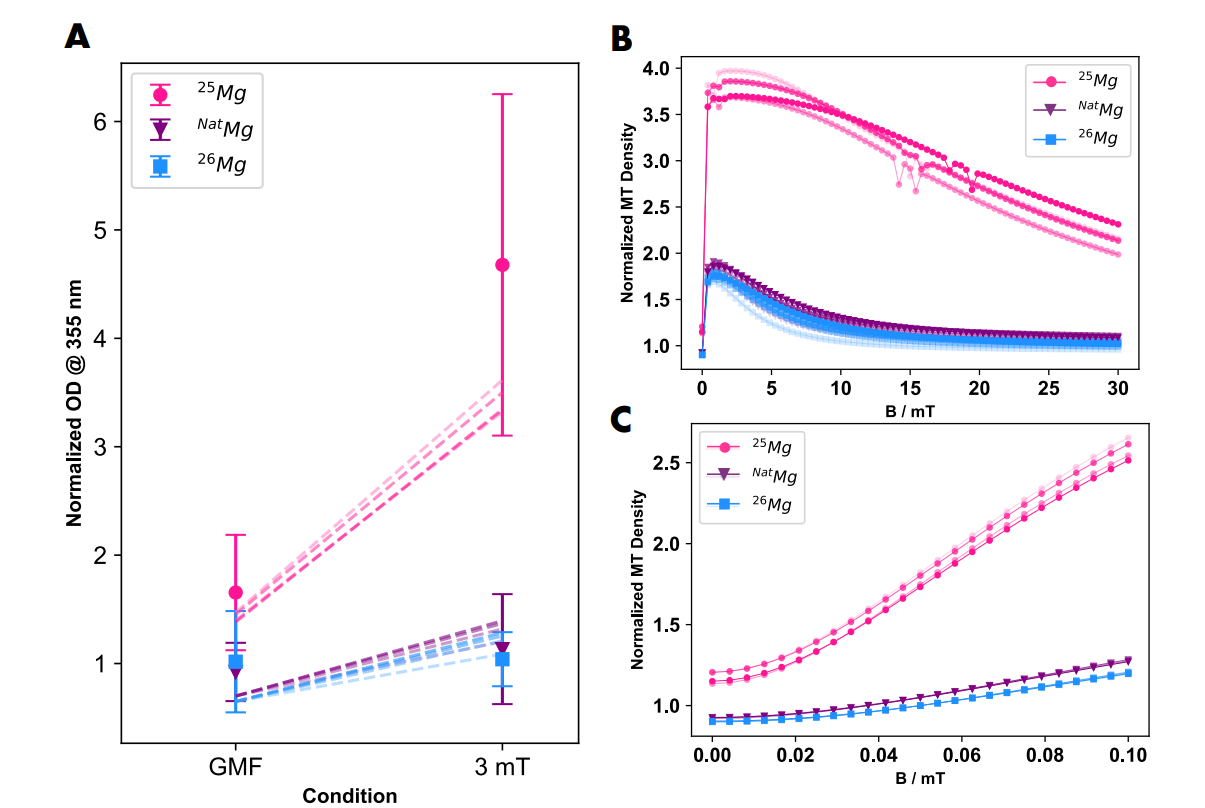
This study tested how weak magnetic fields and magnesium isotopes affect microtubule assembly. Combining experiments and simulations, the authors found isotope-dependent changes explained by a quantum radical pair mechanism, suggesting nuclear spin dynamics can influence microtubule polymerization under weak magnetic fields.
-
![]()
Quantum mechanisms in the brain: from conjectures and theories to experimental evidence
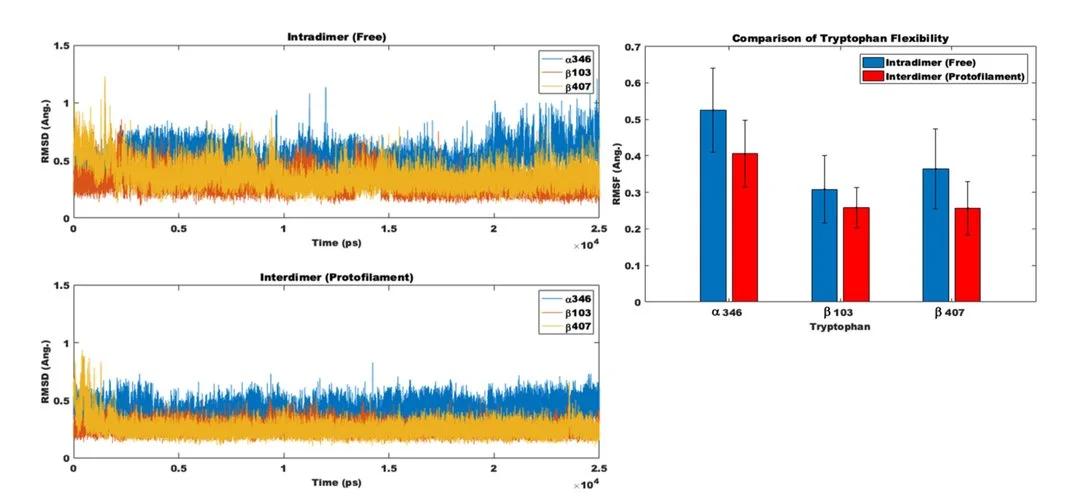
This review examines proposed quantum mechanisms in the brain, such as spin and optical effects, and compares them with existing experimental evidence. It finds some support for quantum influences but highlights major challenges in explaining how these effects could meaningfully impact brain function.
-
![]()
CoMAP: A Program to Cluster Pathways Overrepresented with Specific Cofactors in Human, Mouse, and Yeast
This paper introduces CoMAP, a bioinformatics tool that identifies biological pathways enriched in proteins containing specific cofactors across human, mouse, and yeast genomes. Using gene mapping, overrepresentation analysis, and hierarchical clustering, the authors demonstrate their utility through a ferroptosis case study, recovering both known and potentially novel cofactor-dependent pathways.